
Three approvals answer different questions
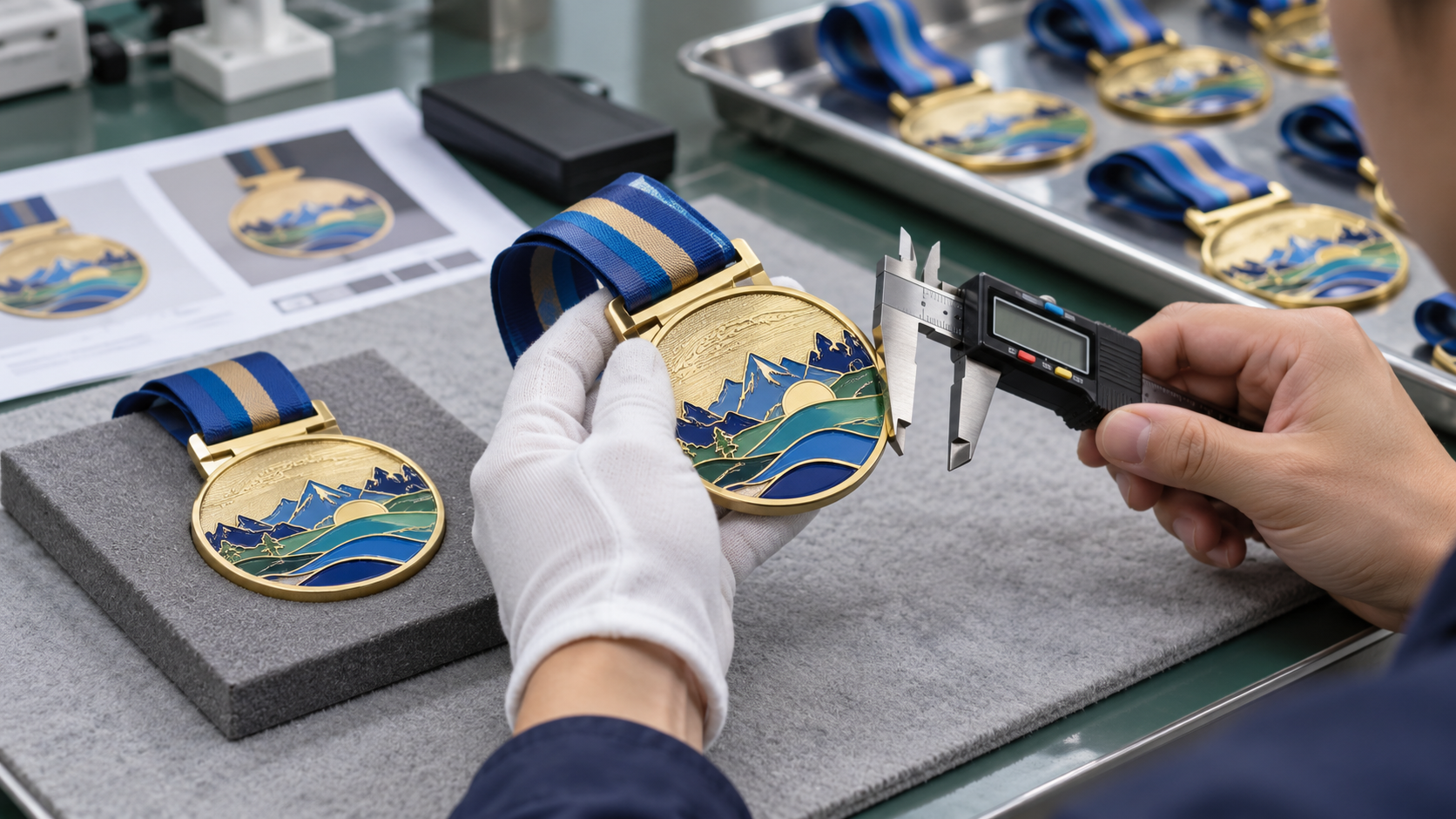
A digital rendering cannot prove that a production medal will have the expected weight, edge feel, enamel appearance, attachment strength or packing. Separate approval gates: design intent, physical construction and bulk conformity. Choose the evidence before a fixed event deadline makes changes expensive.
Buyer discussions on Reddit mention requesting a physical sample for unusual shapes, while supplier FAQs commonly describe a digital proof. Each is useful, but neither guarantees that every unit in a batch will match.
Gate 1: approve a complete digital proof
Check front/back artwork, spelling, numbers, outline, dimensions, relief, plating, color areas, ribbon layout and attachment. Make sure the proof version is recorded. If thickness, process, packaging or another physical attribute is not represented, put it in the written specification instead of assuming the illustration covers it.
Gate 2: decide whether a physical sample is worth it
A physical sample is most useful for first orders, unusual cut-outs, moving parts, fine detail, color interactions, engraving legibility, weight, attachment strength or a premium event. It may add cost and time. Ask what kind of sample is made, which production steps it includes, how many revisions are covered, who pays courier and how approval affects the schedule.
Inspect it against the proof and written specification under neutral light. Check actual dimensions, finish, color, text, edge, ribbon, attachment and packing. Record approved deviations and retain the sample or signed photos as the reference.
Gate 3: define batch inspection
One sample says something about the piece reviewed; it does not prove every bulk unit is conforming. Agree who inspects, timing, sample quantity/method, defect classes, acceptance criteria and corrective action before production. Do not adopt an AQL or tolerance number without naming and agreeing the governing plan.
For pre-shipment review, compare a representative selection with the approved proof and sample. Check dimensions, color, plating, legibility, sharp edges, attachment, count, individual protection and carton labels. Request dated evidence and an inspection record. If an independent inspector is needed, define scope, sample size, timing and cost in advance.
Match evidence to project risk
| Project | Approval plan to discuss |
|---|---|
| Unchanged repeat order | Confirm against the saved approved reference; agree whether count/photos are sufficient |
| First standard-shape order | Complete proof, physical sample or first-piece evidence, written specification |
| Unusual or high-impact order | Proof, physical sample, defined acceptance criteria and documented pre-shipment inspection |
Balance quality risk against sample cost and schedule; no single approval package fits every order.
Keep an approval record
- Final proof version and written specification.
- Sample approval and accepted deviations.
- Inspection scope, selection method and defect definitions.
- Final quantity, carton labels and delivery records.
- Disposition of nonconforming items agreed in writing.
Use the factory inspection checklist and QC checklist.
Frequently asked questions
Is a digital proof the same as a physical sample?
No. A proof checks visual design intent; a sample checks physical construction and appearance, but only for the reviewed sample.
Do I need a physical sample?
Consider one for first orders, unusual constructions or high-consequence defects. Balance cost and added time against design risk.
What should I approve on a medal proof?
Review both sides, spelling, dimensions, finish, colors, ribbon, attachment and any engraving or packing shown; write unspecified details into the spec.
Does a sample guarantee the bulk order?
No. Bulk conformity needs agreed production controls, inspection criteria and a written corrective-action process.
Plan your custom medal order
Share quantity per design, artwork, dimensions, finish, ribbon, destination and required in-hand date for a useful quotation.