
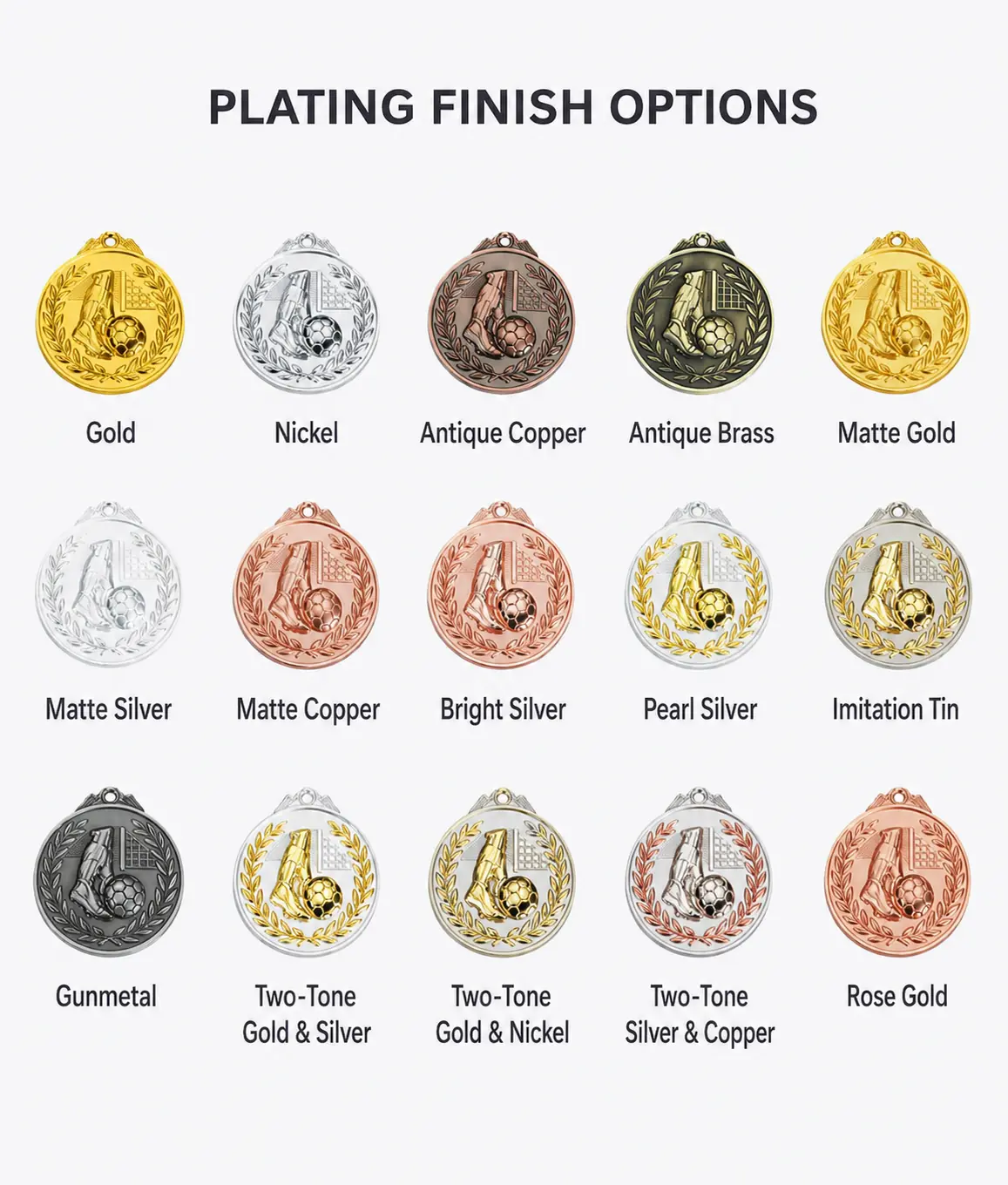
First separate the base metal from the plating finish
Buyers often ask for “gold medals” when they mean a gold-colored surface. In a standard custom medal order, gold, silver, nickel, copper or bronze usually describes the visible plating direction—not a solid precious-metal body.
The quotation should identify the base construction, forming method, finished dimensions, relief and plating as separate lines. For example, a zinc-alloy die-cast body with bright gold plating is a clearer specification than “gold medal.” This separation also makes supplier quotations easier to compare.
Custom medal finish comparison
| Finish direction | Visual effect | Strong design fit | Buyer check |
|---|---|---|---|
| Bright gold or silver | High reflection and clean highlights. | Modern awards, podium sets and polished brand marks. | Glare, enamel contrast and handling marks. |
| Antique gold, silver or bronze | Darkened recesses emphasize relief. | Race, heritage, commemorative and sculpted designs. | Depth of antique effect and which areas stay bright. |
| Black nickel | Dark reflective metal frame. | Contemporary artwork and bright color contrast. | Visibility of dark enamel, fine lines and text. |
| Matte, satin or brushed direction | Softer reflection and reduced glare. | Formal awards and understated metal-only designs. | Texture direction and consistency across flat areas. |
| Rose gold or copper direction | Warmer metallic color. | Fashion, wellness, anniversary and selected brand palettes. | Reference sample and surrounding enamel colors. |
| Dual plating or two tone | Two metal appearances on one medal. | Designs with strong structural separation. | How the finishes are masked and divided. |
Bright gold and silver plated medals
Gold plated medals create warm, high-reflection metal lines and highlights. Silver plated medals create a cooler neutral frame. Both can work well when the artwork has clean relief and the color palette needs a bright metal edge.
Bright plating shows reflection clearly, which can make polished raised areas look sharp. It can also make wide flat areas visually intense under direct lighting. If the medal has a large uncolored field, compare a bright finish with satin, sandblasted or antique alternatives.
Shiny gold medals and matte gold medals should not be treated as the same look. State the reflection level and texture direction rather than using “gold” alone.
Antique gold, silver and bronze medals
Antique gold medals, antique silver medals and antique bronze medals use darker recessed areas to bring out relief. The effect can make lettering, borders, landmarks and sculpted subjects more readable without adding enamel color.
Antique finishing is often a strong fit for sports, trail races, heritage events and commemorative pieces. It can also reduce the mirror-like effect of a fully bright face. The exact darkness and contrast vary with relief depth, texture and finishing reference, so approval from a screen image has limits.
Black nickel, gunmetal and dark medal finishes
Black nickel medals create a dark reflective surface that can frame bright enamel effectively. Dark plating can give modern or dramatic artwork a distinctive look, but it reduces contrast with black, navy and other dark fills.
Review the design in grayscale as well as color. Fine metal lines that separate dark enamel may become visually quiet. A supplier may recommend changing a color, widening a border or using a different finish in selected areas.
Dual plated and two-tone medals
Dual plated medals or two tone medals combine two metal appearances on one product where the geometry and finishing process allow separation. A common design goal is to distinguish a central figure from a border, or to create a gold-and-silver hierarchy without adding enamel.
Two-tone work should be planned from the beginning. The proof needs to show the exact boundary between finishes and identify any raised or recessed structure used to control that boundary. Do not assume that any flat line in the artwork can become a reliable plating division.
Match plating with enamel and print colors
The same enamel color can look different beside bright gold, antique silver or black nickel. Warm plating can reinforce red, orange and cream palettes; cool silver can support blue and corporate neutrals; dark plating can sharpen bright fluorescent-style colors but reduce separation around dark fills.
If the medal uses UV print, confirm the base surface under the printed zone. If it uses hard enamel, confirm that the selected plating and polishing route are compatible. If it uses soft enamel, decide whether the recessed texture should remain visible or receive any clear protective layer.
Plating proof and sample checklist
- Base material and forming method
- Named plating or finish direction
- Bright, antique, satin, matte or brushed appearance
- Front, back and edge treatment
- Areas that remain polished, recessed or textured
- Exact separation for any dual plating
- Enamel or print colors beside the metal finish
- Reference sample or physical sampling plan when appearance is critical
Screen artwork is useful for placement but cannot reproduce every reflection, texture or antique recess. Use a relevant physical reference when a precise metallic appearance is part of the buying decision.
What to send for a finish recommendation
Send the artwork, quantity, target size and thickness, intended use, preferred relief, color process, candidate plating direction, ribbon, packaging, destination and required date. If the project belongs to a brand or event series, include photographs of existing items so the finish can be reviewed for consistency.
How plating choices affect an overseas medal quote
To compare bright, antique and two-tone finishes fairly, keep medal size, base metal, quantity, ribbon and packaging constant. Extra surface treatments and two-tone separation may require different manufacturing steps; request the actual finish quotation rather than assuming every gold-colored medal costs the same.
Our Dongguan factory can coordinate relief, plating, enamel, ribbon and packing for worldwide medal orders, with an advertised MOQ from 100 pieces. Ask for a physical reference when exact metallic appearance matters. Start with the published standard-medal price assumptions, then send the finish you want for a specification-based quote.
Frequently asked questions
What is the most popular custom medal plating finish?
Bright and antique gold, silver and bronze directions are common, but the best finish depends on the artwork, relief, enamel colors and presentation.
What is the difference between bright and antique medal finishes?
Bright finishes reflect more light. Antique finishes darken recessed areas to emphasize relief and create an aged or traditional appearance.
What are black nickel medals?
Black nickel creates a dark reflective metal appearance. It can contrast with bright enamel but needs an artwork-specific visibility review.
Can a custom medal use two plating colors?
A dual-plated or two-tone medal may be possible when the geometry allows the finishes to be separated and controlled.
Are gold plated medals made of solid gold?
No. Gold normally describes the surface plating direction, not a solid-gold body. Confirm the base construction and plating in the quotation.
Should I approve plating from a screen image alone?
Screen previews help confirm placement but cannot reproduce every reflection or antique effect. Request a relevant physical reference when appearance is critical.
Factory quotation · MOQ from 100 pieces
Need a Plating and Finish Recommendation?
Send the artwork, quantity, size, relief, colors, ribbon, delivery country and required date. We will suggest a practical primary finish and alternative.