
Standard soft enamel
Start with a 60 mm, one-sided design, one plating and a plain ribbon for a comparable budget.
Quote a standard medalBuyer process template
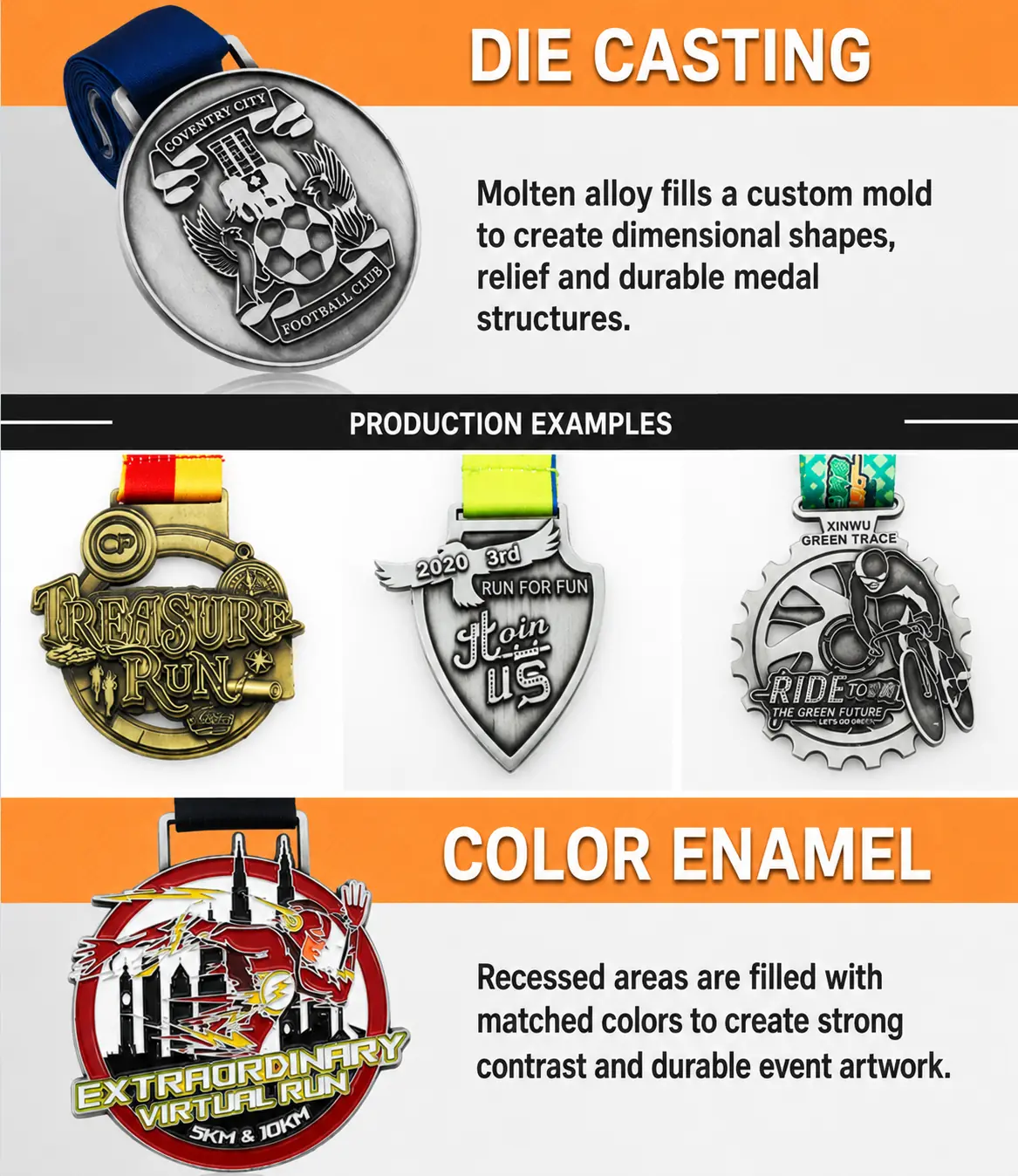
Compare how custom medals are made using die casting, die striking, 2D or 3D relief, cut-outs, enamel, UV printing, plating, ribbon assembly and packaging.
Use die casting for custom shapes and deeper relief, die striking for flatter crisp metal detail, enamel for separated solid colors and UV printing for gradients or photographic artwork. Add plating, texture, ribbon and packaging only after the base construction is confirmed on the digital proof.
Specification template
One medal can combine several processes. Use the table as a discussion template, then let the factory confirm feasibility from the artwork and target size.
| Process | Best used for | Visible result | Confirm in artwork / RFQ | Budget / schedule consideration |
|---|---|---|---|---|
| Die Casting | Custom shapes, dimensional structures and medium-to-deep relief | Solid metal body with shaped edges and raised detail | Size, thickness, front/back relief and loop position | One new mold per design; confirm relief and outline before tooling. |
| 2D Relief | Logos, text, borders and clearly separated graphic levels | Flat raised and recessed planes | Raised, recessed and flat areas | A useful starting point for a simpler standard specification. |
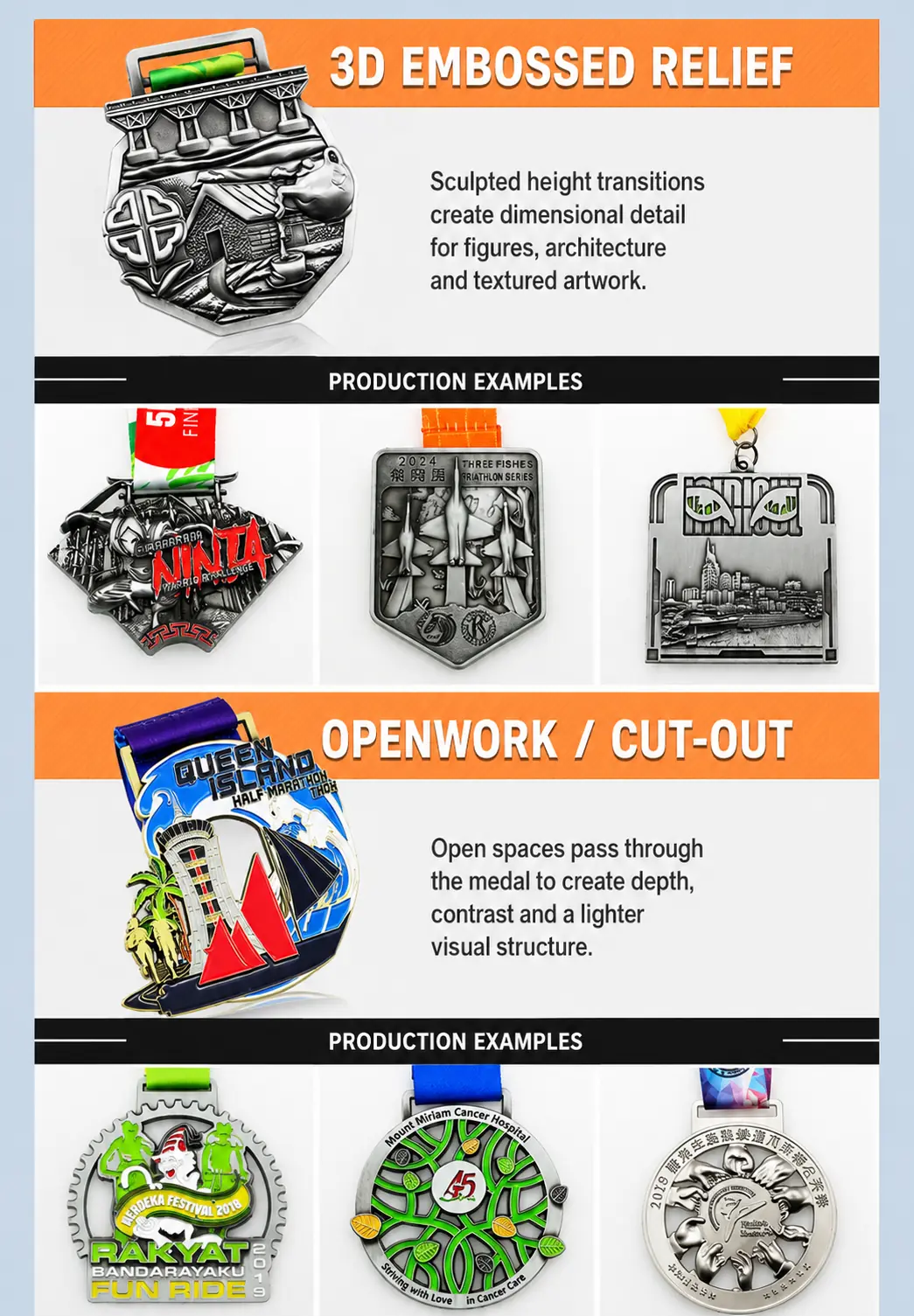
| 3D Relief | Faces, animals, architecture and sculpted forms | Gradual height transitions and dimensional texture | Highest point, side profile and areas that must remain readable | Extra sculpting and tooling review; quote the sample schedule separately. |
| Openwork / Cut-Out | Designs that use negative space for contrast or reduced visual weight | True openings through the metal | Minimum bridges, edge strength and ribbon connection | Bridge strength and loop position affect feasibility and tooling. |
| Enamel Color | Separated solid colors with metal borders | Recessed texture or a polished smooth face | Pantone colors, metal line width and soft vs hard enamel | Soft enamel is the reference-price route; polished hard enamel needs a separate quote. |
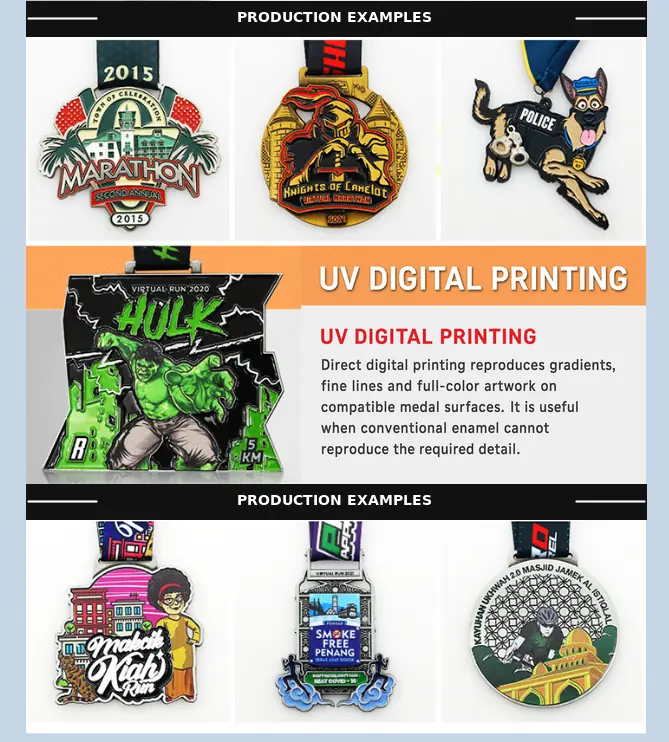
| UV Printing | Gradients, photographs and very fine full-color detail | Direct printed color on a compatible surface | Print area, white underbase, artwork resolution and protective finish | Prepare print-ready artwork and approve the color method. |
| Plating | Gold, silver, nickel, copper, antique, matte and two-tone appearance | Overall metal color and surface character | Finish name, polished/matte areas and two-tone boundaries | One standard plating is simpler than selective or mixed finishes. |
| Ribbon & Packaging | Event identity, retail presentation and distribution | Printed or woven ribbon plus selected presentation | Ribbon width/length, printing, connection, individual packing and box | Plain ribbon and polybag are the reference; custom printing and boxes cost extra. |
Choose a starting specification
Start with a 60 mm, one-sided design, one plating and a plain ribbon for a comparable budget.
Quote a standard medalSend your reference, target dimensions and side-profile requirements for tooling review.
Review 3D feasibilityShare the original artwork so printing can be compared with enamel at your chosen size.
Compare color optionsColor and surface
These options affect texture, detail reproduction and the way color sits against the metal or plastic surface.

Color is filled below raised metal lines, leaving a tactile recessed surface. It suits vivid color separation and designs where visible metal borders are part of the look.

Color is filled and polished close to the metal lines for a smooth face. It is often selected for a refined, jewelry-like presentation.
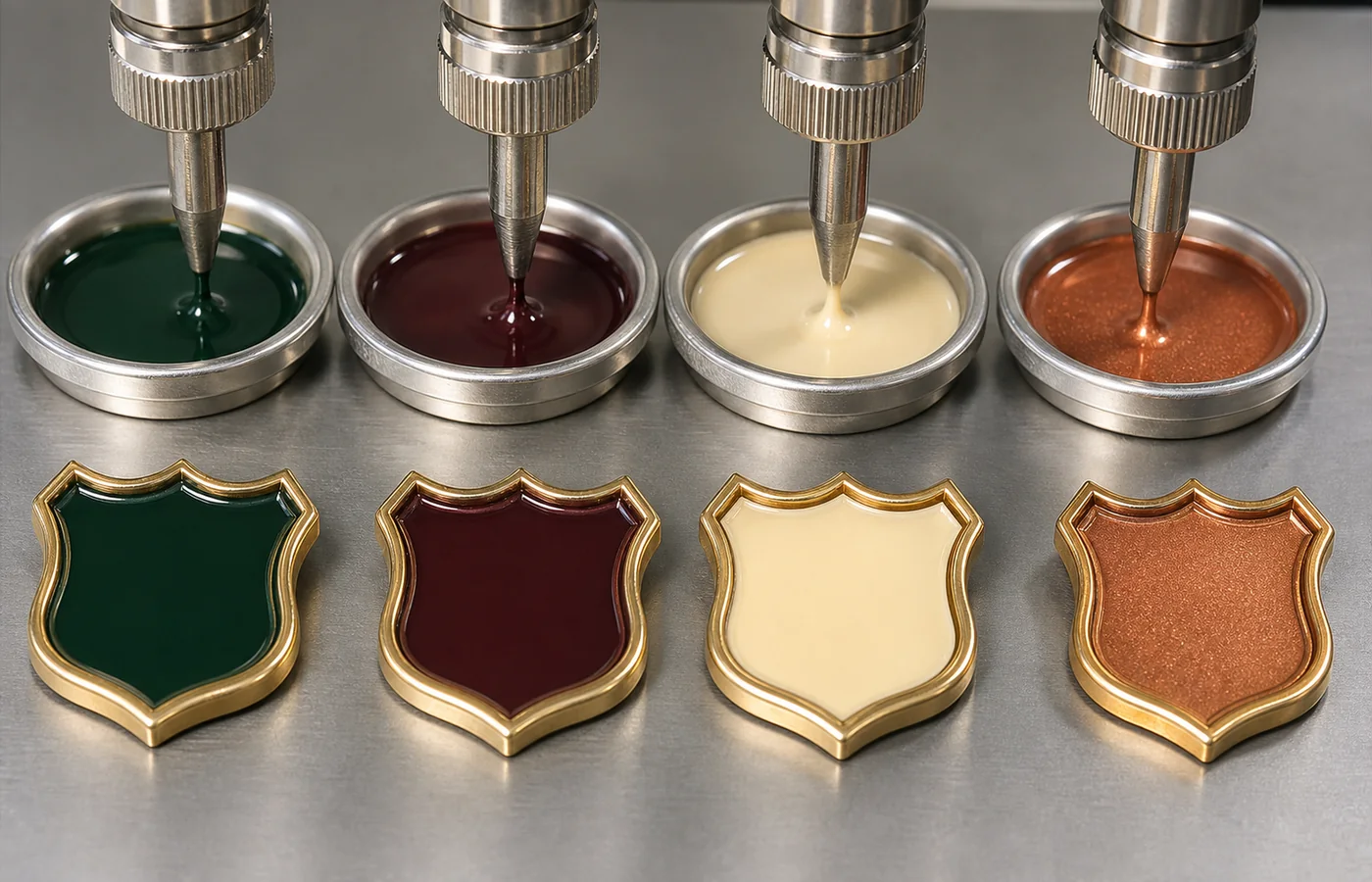
Printing supports gradients, fine details and complex artwork. A clear epoxy dome can add surface protection and a rounded glossy appearance where suitable.
Factory process boards
The examples below show how casting, enamel, dimensional relief, openwork and UV printing change the final visual result.
Form and depth
Relief depth should be selected according to the design rather than used as a blanket premium feature.

Uses clearly defined raised and recessed levels. It works well for text, logos, borders and graphic shapes that need clean separation.

Uses gradual height transitions for faces, figures, animals, architecture and sculpted forms. Fine text usually remains 2D for clarity.
Metal finish
Common directions include polished gold, silver and nickel, gunmetal, antique brass, antique copper, matte surfaces and selected two-tone finishes. Availability depends on the base material and product.
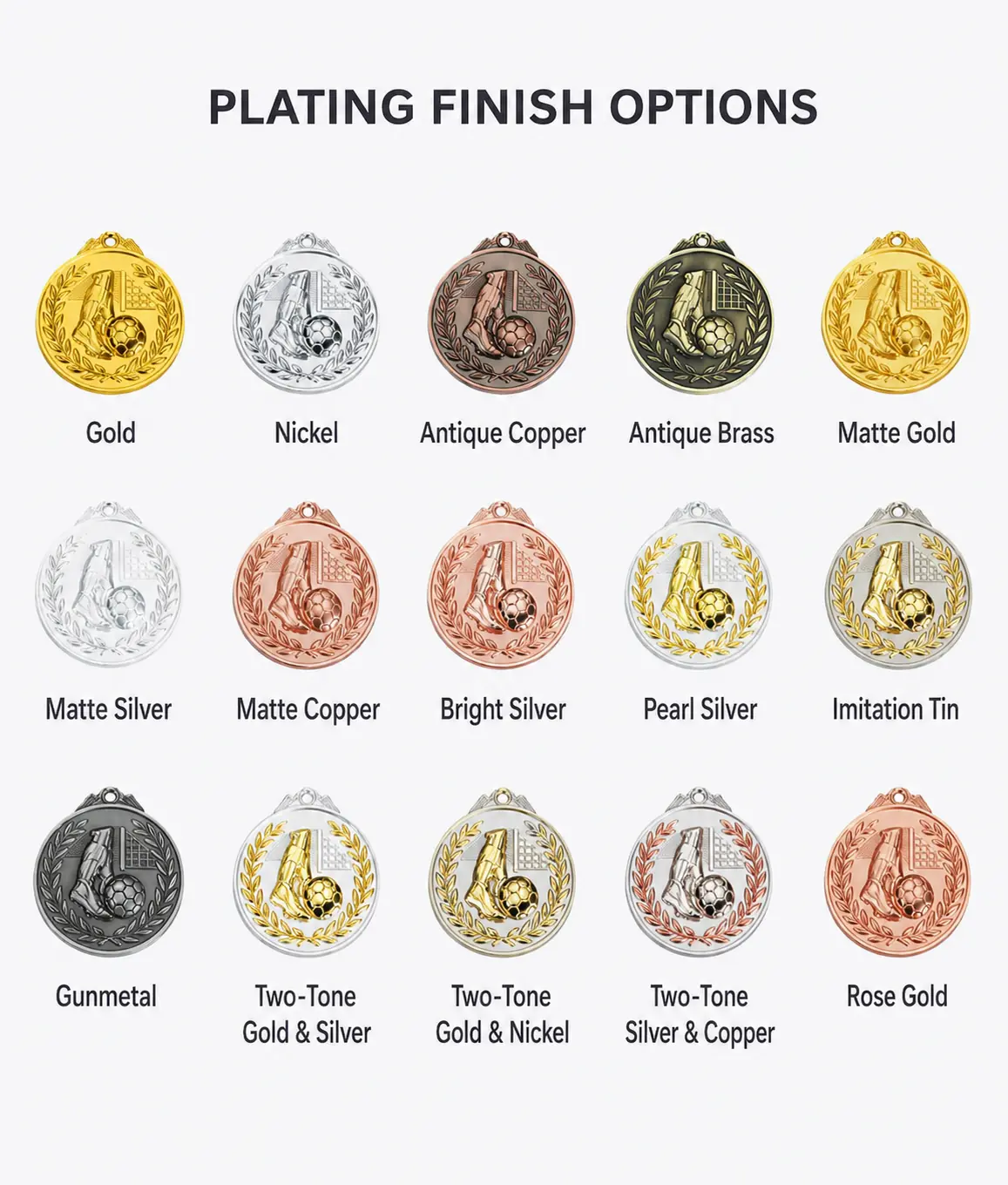
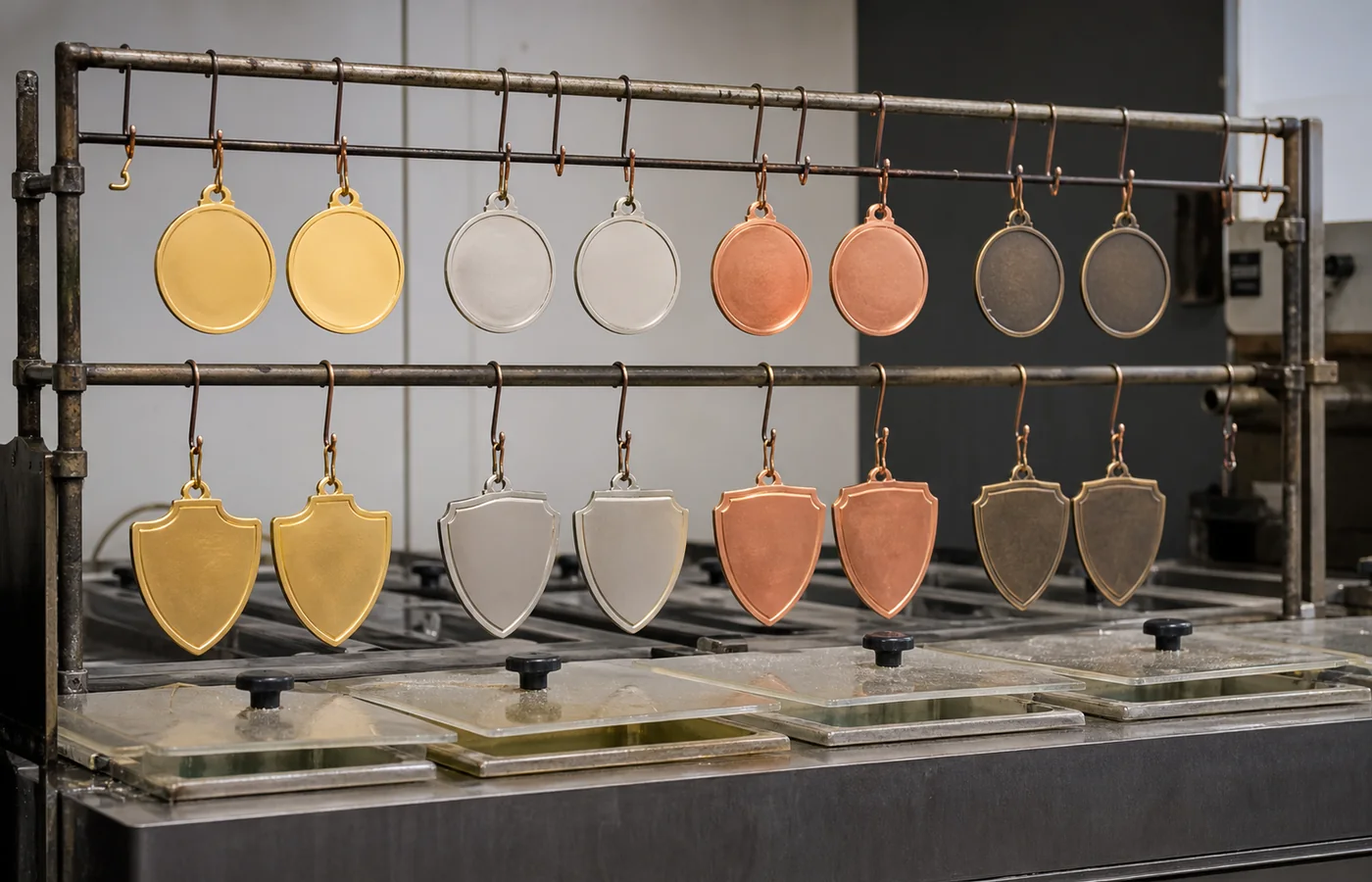
Bright polished plating creates strong highlights, while satin or brushed directions create a softer reflected surface.

Darkened recesses increase contrast and emphasize relief. Antique finishes are often used for heritage, sports and commemorative designs.
Attachments
The attachment must match the product weight, use, presentation and target market.
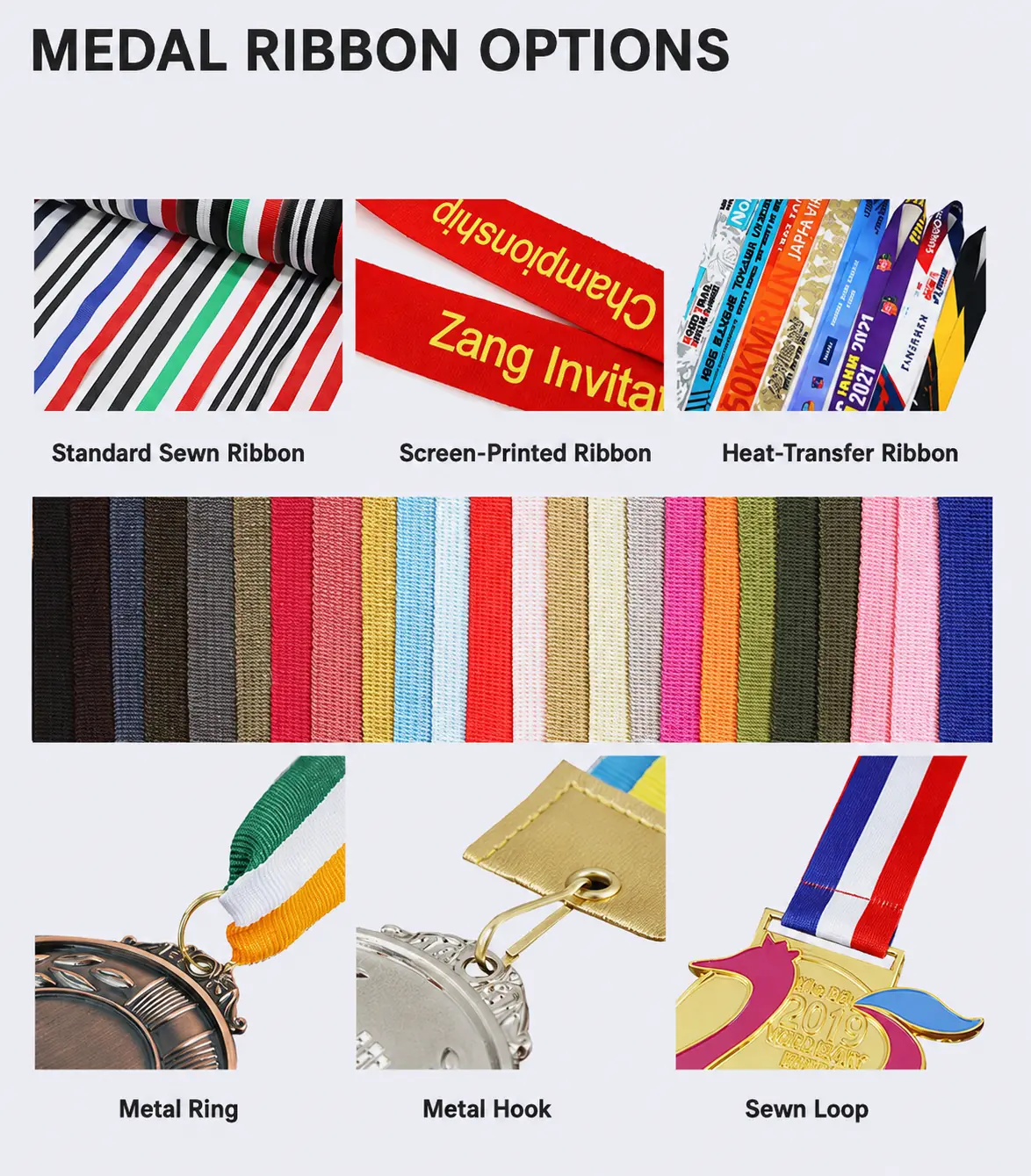

Butterfly clutch, rubber clutch, safety pin, brooch pin, magnet, adhesive backing and other confirmed options.

Ribbon width, material, color, printing, loop structure and connection method are confirmed with the medal design.

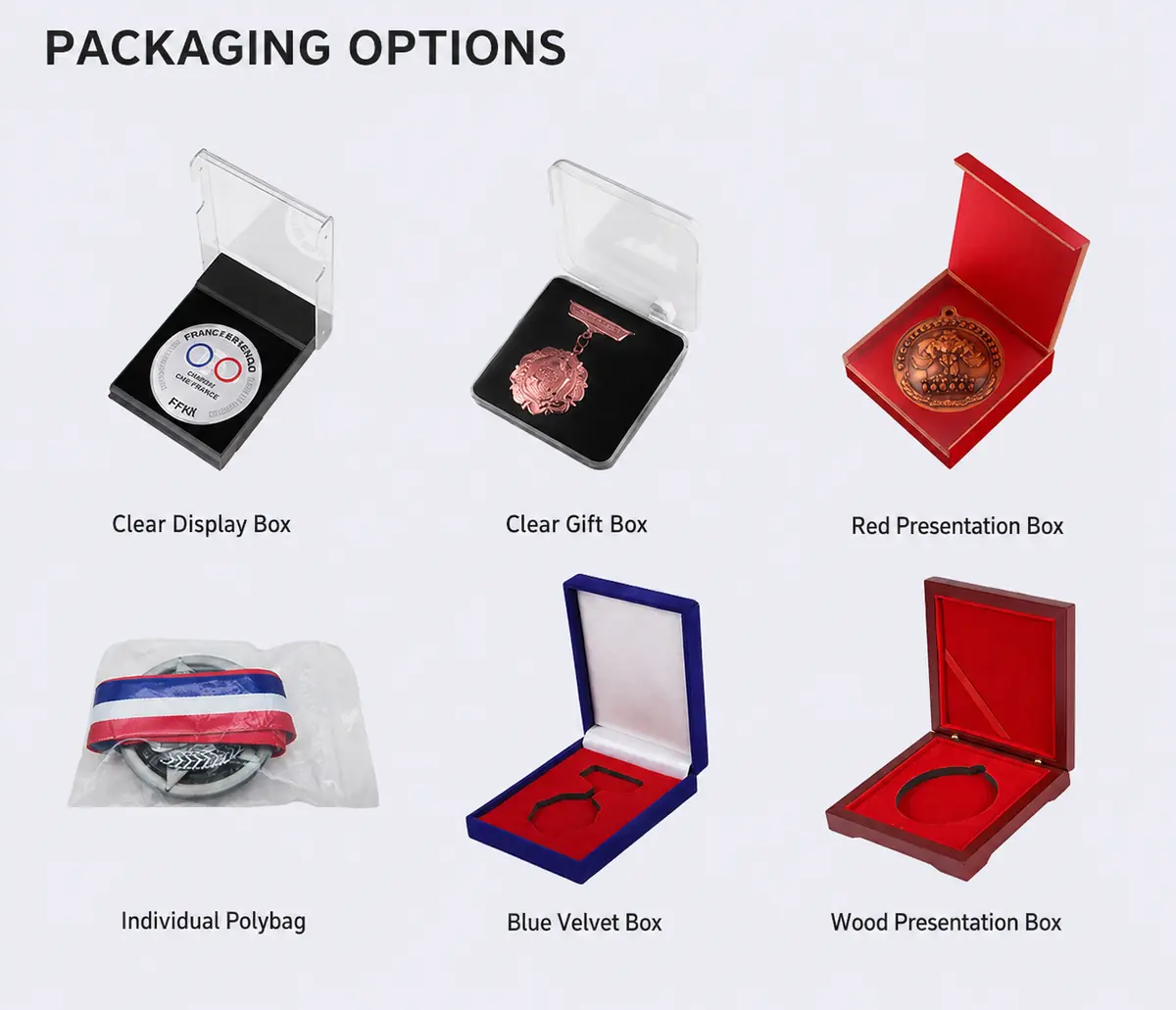
Individual polybags, backing cards, velvet boxes, paper boxes and custom retail packaging may be discussed.
Process buyer guides
Use these four guides to resolve the highest-impact forming, color and surface decisions before requesting a quotation.
Forming
Compare custom outlines, relief, thickness, material and tooling.
Compare forming processesEnamel
Choose a tactile recessed surface or a smoother polished face.
Compare enamel finishesFull Color
Decide how to reproduce gradients, photos, sponsor logos and solid colors.
Compare color processesMetal Finish
Compare gold, silver, antique, black nickel, matte and dual-tone directions.
Choose a plating finishProcess selection FAQ
The best process depends on artwork detail, required depth, color method, surface appearance, product use, quantity and budget. Send the artwork for review before the route is confirmed.
UV printing is useful for gradients, photographs and very fine full-color detail that conventional enamel cannot reproduce. Enamel is better when separated solid colors and tactile metal borders are part of the design.
Yes. A suitable design may combine relief, enamel, printing, plating, openwork and a custom ribbon. Feasibility is confirmed from the artwork and dimensions.
Include the quantity, target size, product use, preferred relief, colors, plating, ribbon, packaging, destination and required date. We will confirm the practical route before quotation.