
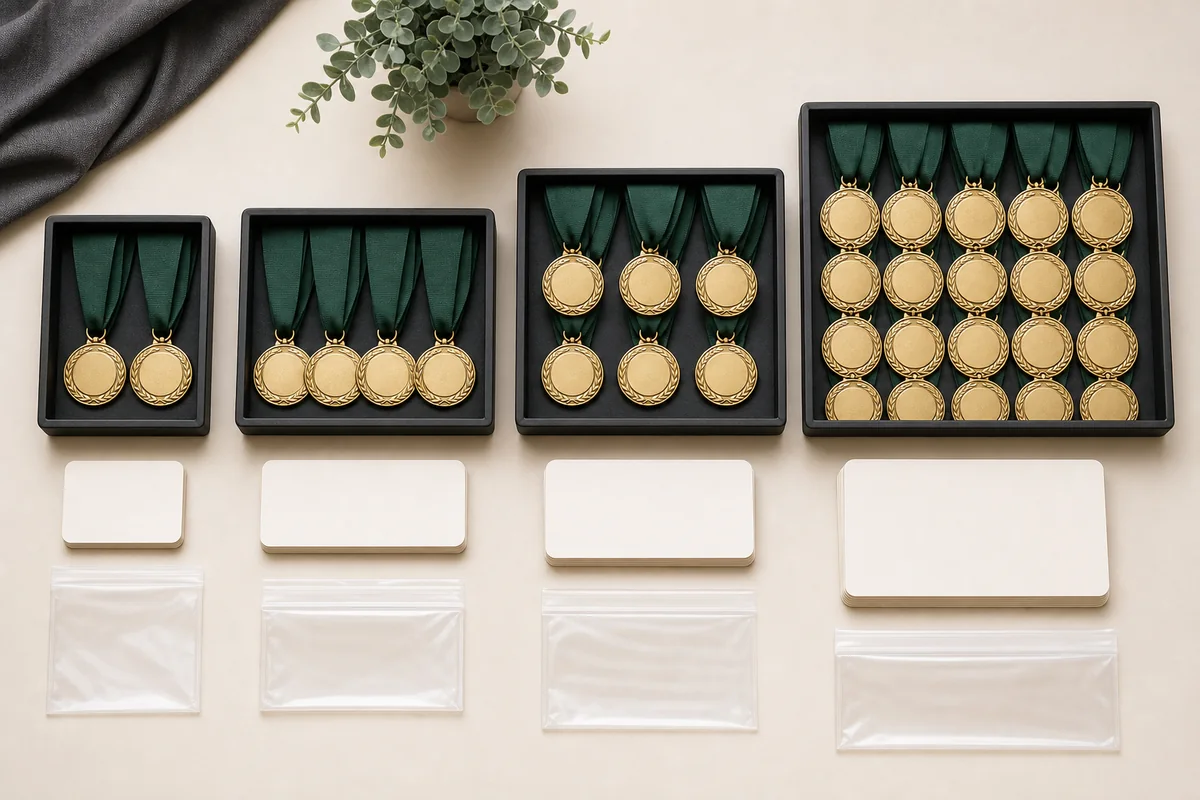
How medal size changes the finished result
Diameter or overall width affects the amount of space available for text, logos, borders and relief. Size also changes perceived weight, ribbon balance, packaging volume and freight. The correct dimension is the smallest size that preserves the intended artwork and presentation standard.
Practical diameter ranges
| Planning range | Common use | Buyer consideration |
|---|---|---|
| About 40–50 mm | Compact awards, youth events, simple recognition | Keep text and linework limited; check ribbon proportion. |
| About 50–65 mm | School sports, clubs, community events | A practical balance of visibility, weight and packing. |
| About 65–80 mm | Running events, branded awards, richer relief | Supports more artwork detail but increases weight and material. |
| Above 80 mm | Premium races, anniversaries, statement awards | Confirm wearing comfort, thickness, ribbon strength and freight. |
These are planning ranges, not fixed factory rules. Non-round shapes should be measured by maximum width and height.
How to choose thickness
Thickness should support the material, process and relief depth. A flat printed medal may not need the same structure as a deep 3D design. Very thin edges can distort; unnecessary thickness adds weight and cost. Ask whether the stated thickness refers to the base, the highest relief point or the full finished profile.
- Confirm the base metal and forming process
- Identify the deepest recessed and highest raised areas
- Check edge strength around cut-outs
- Allow room for attachments and ribbon loops
- Confirm the finished weight before approving packaging
Artwork and text readability
Small text, thin borders and crowded sponsor logos are frequent causes of disappointing medals. The digital proof should show the medal at actual size. Buyers should verify minimum line width, letter height, enamel separation and whether very small detail should be simplified, printed or removed.
Weight, ribbon and packaging
Medal weight affects ribbon drape, neck comfort, mailing cost and box selection. A larger medal may require a wider ribbon, stronger clip or more protective packaging. For events, also consider how hundreds of medals will be transported, sorted and handed out.
Ask the factory to compare two sizes on one specification
A dimensions guide becomes useful to buyers when the cost comparison holds everything except size steady. For example, ask for a standard 60 mm × 3 mm zinc-alloy medal and a second size recommended for your actual design. Keep the 2D/3D relief, plating, enamel color count, ribbon, packing and order quantity consistent in both quotations; then ask which design details would need to change.
| Quote input | Standard reference | Alternative |
|---|---|---|
| Medal dimensions | 60 mm × 3 mm | Your requested size or factory recommendation |
| Artwork | Same approved logo, text and shape concept | Same artwork, revised only where readability requires it |
| Finish and ribbon | 2D soft enamel, one standard plating and plain 25 mm ribbon | Same construction for a fair comparison |
| Quote totals | Units, tooling, any sample, freight and import terms separately | Exactly the same cost categories |
The website's published standard-medal quantity pricing applies only to its stated reference specification; a larger, thicker or irregular shape needs an individual factory quote. We welcome worldwide orders from 100 pieces per eligible design. Ask us to review your size and artwork →
What to include in the RFQ
- Target width and height, or the intended event type
- Preferred thickness or desired weight impression
- Artwork and all required text
- 2D or 3D relief preference
- Ribbon width, printing and attachment
- Quantity, packaging and delivery country
- Required in-hand date
Updated buyer answers · 2026-08-29
Questions buyers ask before they approve this specification
These answers expand the guide around the purchase decisions most likely to change price, production feasibility, quality control or the required in-hand date.
What is the best size for custom medals?
There is no single best diameter or width. A school award with a simple crest, a large marathon finisher medal and a corporate recognition piece have different display and wearing needs. Choose size after testing the event name, date, sponsor marks and smallest details at the intended physical scale.
How does custom medal thickness affect 2D and 3D relief?
Thickness must support the edge, front and back construction and intended relief. Deep sculpted areas may need more usable depth than a flat printed design, but extra thickness also changes weight and freight. Confirm the proposed relief profile instead of choosing thickness from a competitor photo.
Should running and marathon medals be larger than other awards?
A larger format can create display value and accommodate race identity, distance and sponsor information, but it must remain comfortable and stable on the ribbon. Review weight, neck-ribbon width, packing method and race-day distribution before approving a large custom medal.
Common buyer questions
Common questions
What is a good medal size for a 5K race?
A medium-size medal often gives enough space for the event name, date and a clear central design. The final size should be confirmed from the actual artwork and target weight.
Does a thicker medal always look more premium?
No. Premium appearance also depends on artwork, relief, plating, polishing, ribbon and packaging. Extra thickness without a design purpose can add weight and cost.
How should an irregular medal be measured?
Use the maximum overall width and height, and identify any narrow points or cut-outs that may need additional strength.
Can the manufacturer recommend a size?
Yes. Send the artwork, intended use, quantity and budget direction so the design can be reviewed at realistic production scale.
Factory quotation · MOQ from 100 pieces
Request a Specification-Based Size and Thickness Quote
Send one written specification covering quantity, artwork, size, finish, ribbon or attachment, packing, destination and required in-hand date. We will review feasibility before quoting.