
Reference prices · USD
Custom medal price by quantity
| Quantity | Per medal | Your quotation |
|---|---|---|
| 100 pcs | US$2.80–3.80 | Quote 100 pcs |
| 250 pcs | US$2.20–2.90 | Quote 250 pcs |
| 500 pcs | US$1.70–2.30 | Quote 500 pcs |
| 1,000 pcs | US$1.40–1.90 | Quote 1,000 pcs |
| 3,000 pcs | US$1.20–1.65 | Quote 3,000 pcs |
What this reference includes
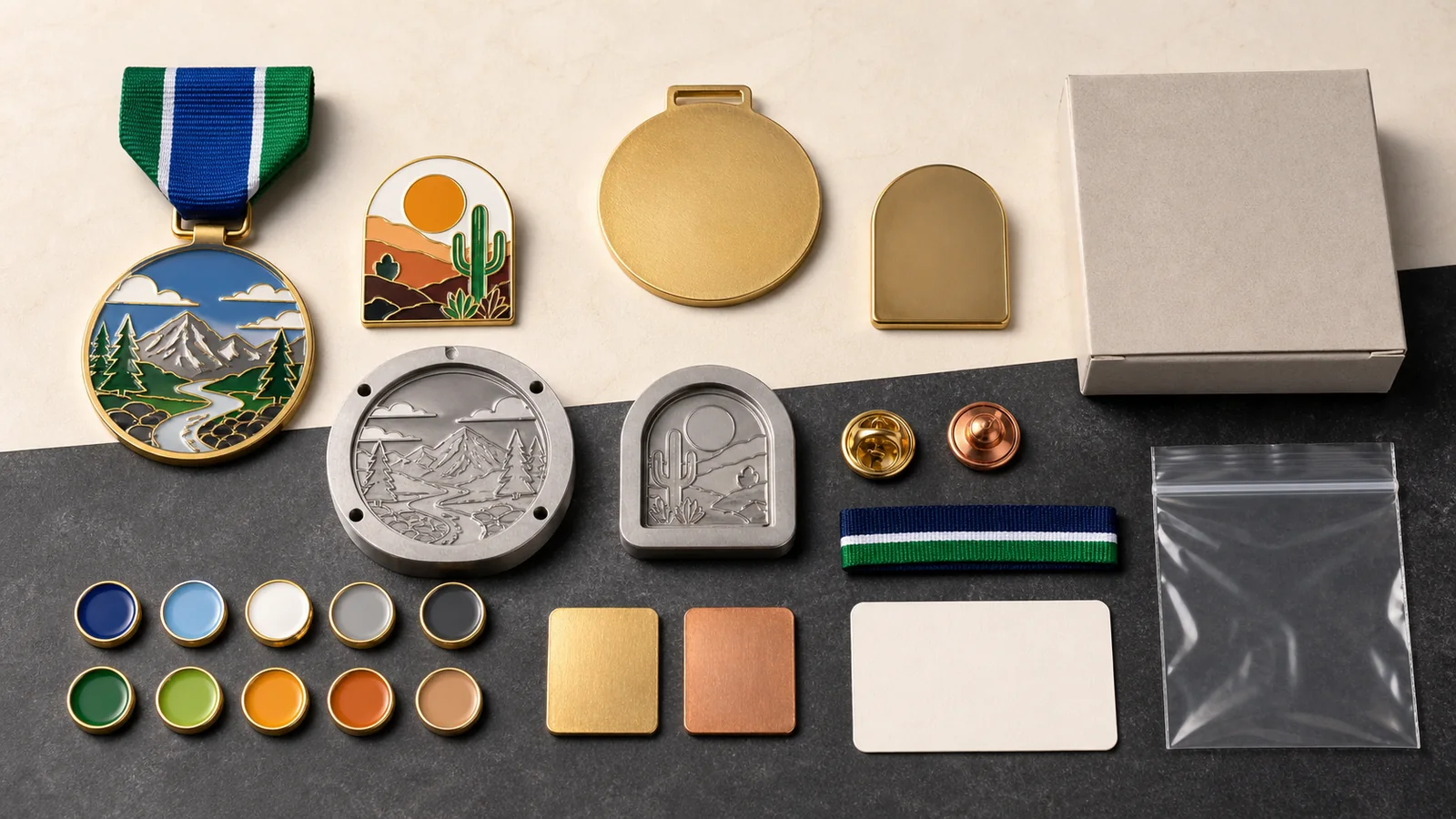
One design, approximately 60 mm × 3 mm zinc alloy, one-sided 2D soft enamel with up to 4 colors, one standard plating, a plain 25 mm polyester ribbon and an individual polybag.
Tooling, physical samples, freight, duties and taxes are separate. Printed ribbons, gift boxes, individual engraving, deep 3D relief and multiple designs require a separate quotation.
Planning estimates, not a confirmed offer. Your written quotation confirms the final specification and total delivered cost.
Example: a 500-piece standard order
500 × US$1.70–2.30 = US$850–1,150 for medals, plain ribbons and individual polybags. Add the quoted tooling, any physical sample, shipping and import costs. This is a budget illustration, not an accepted order price.
Updated buyer answers · 2026-08-29
Questions buyers ask before they approve this specification
These answers expand the guide around the purchase decisions most likely to change price, production feasibility, quality control or the required in-hand date.
How much do custom medals cost for 100, 250 or 500 pieces?
Under the standard 60 mm soft-enamel specification above, indicative prices are US$2.80–3.80 each for 100 pieces, US$2.20–2.90 for 250 and US$1.70–2.30 for 500. These include a plain ribbon and polybag; tooling, samples, freight and taxes are separate. Compare final quotations on the same specification.
Why is the unit price higher for a 100-piece medal order?
Artwork preparation, tooling and machine setup are fixed activities that are divided across fewer units. Small batches can still be practical, but the buyer should avoid unnecessary versions and compare total spend—not only unit price. A slightly larger quantity is useful only when the extra medals have a real purpose.
What information prevents surprise costs in a custom medal quote?
Send finished dimensions, quantity per design, front and back artwork, 2D or 3D direction, plating, enamel or printing, ribbon, packing, destination and required in-hand date. Ask whether mold, sample, packing and freight are included. Written exclusions make custom medal pricing easier to compare.
Custom medal and pin pricing depends on the complete specification. Quantity, dimensions, mold, colors, relief, plating, attachment, packaging, sampling and shipping should be compared together; fixed unit prices without these facts are unreliable.
Why is a fixed custom medal or pin price misleading?
Two pins described as “50 mm hard enamel” can have different outlines, metal thickness, color areas, cut-outs, posts and packaging. Two medals of the same diameter can differ in relief depth, weight, ribbon and presentation box. A headline unit price hides those differences.
A useful quotation records the actual product. Buyers should be able to compare quantity, size, thickness, metal, finish, attachment, packaging, tooling, sampling and shipping. If one supplier omits a necessary item, the lower total may not remain lower after production begins.
How does quantity affect cost?
Artwork preparation, mold making and machine setup are largely fixed activities. At 100 pieces, they are shared by a small run. At 500 pieces, the same activity is divided across more units. Production and packing may also become more efficient as quantity grows.
Lower unit cost does not mean lower business risk. Extra pieces use cash, storage space and packaging, and they can become obsolete when a date, sponsor or color changes. Compare total spend with expected use and sell-through.
How do size and thickness affect the quotation?
Larger or thicker products use more metal and increase weight. Custom outlines may use material differently from simple geometry. Deep 3D relief can require more tooling work than flat 2D steps. These choices also affect carton weight and shipping.
Choose dimensions after considering artwork legibility, wearing comfort, presentation and freight. A manufacturer should identify details that would disappear at the requested size rather than simply scaling the artwork down.
What do molds and color count add?
The mold creates the metal structure. Its cost depends on product, size and artwork. Color adds enamel or printing work, with metal boundaries needed between many enamel areas. A design with six colors and dozens of tiny fills requires more handling than a design with three broad areas.
Do not remove an important brand color just to simplify. First remove colors or micro-details that do not improve recognition at normal viewing distance.
What changes with 2D, 3D and plating?
Two-dimensional relief uses defined raised and recessed levels. Three-dimensional relief creates sculpted transitions and is useful for faces, animals, landscapes or dimensional forms. It can require more complex artwork and tooling.
Gold, silver, copper, black nickel and antique effects change contrast and mood. Special combinations or selective finishes may add process steps. Ask the supplier to quote the chosen finish rather than assuming every plating carries the same cost.
How do attachments and packaging change cost?
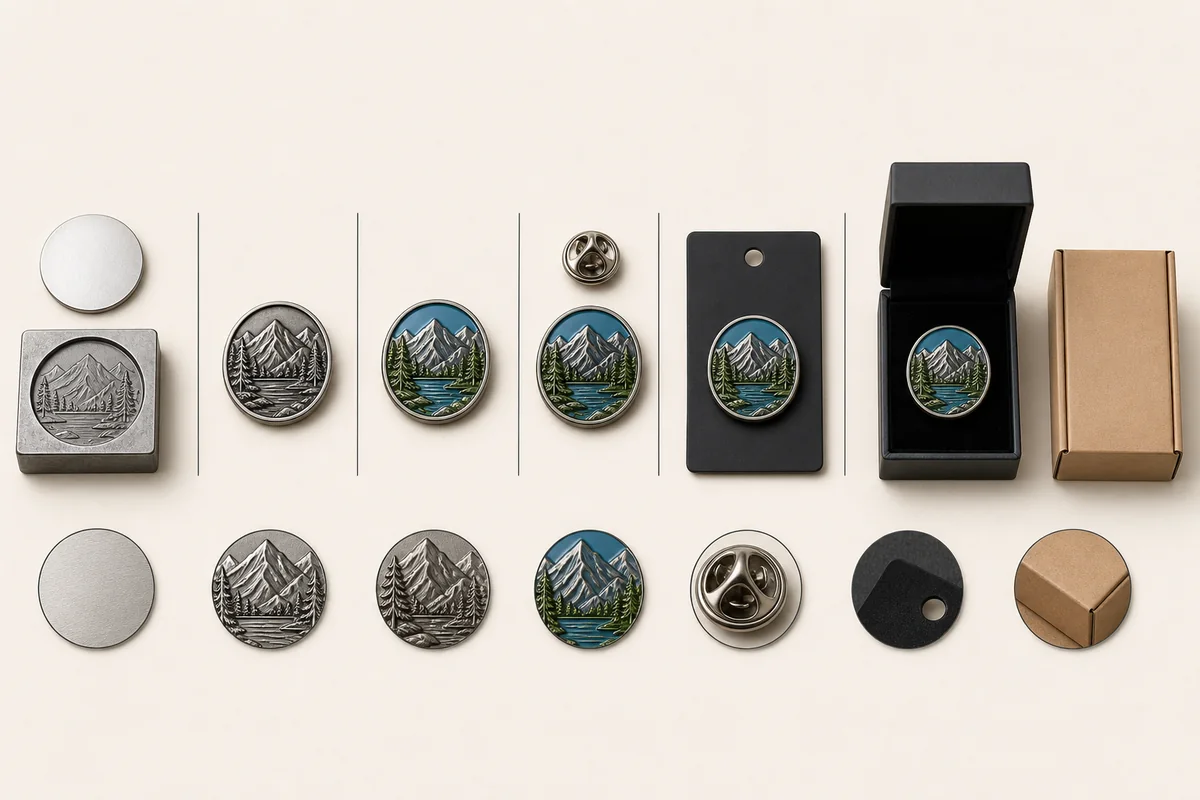
A butterfly clutch, rubber clutch, safety pin, magnet and custom ribbon have different hardware and assembly. Large or heavy items may need two posts or a stronger connector. Attachment choice should follow use, not only the lowest component cost.
Individual bags protect surfaces efficiently. Backing cards support retail and brand presentation. Velvet boxes create a more formal experience but add material, assembly and carton volume. Specify packaging dimensions and printing so freight is not estimated from the bare product.
What should you know about samples, shipping and urgent work?
A physical sample can reduce risk for a new finish, complex relief or important presentation, but it adds tooling, production and courier time. Clarify whether the sample is functional, whether changes require new tooling and how it affects the bulk schedule.
Shipping depends on weight, volume, destination and speed. Urgent orders may reduce the time available for revision, sampling or economical freight. Ask for an order-specific timeline rather than relying on a standard promise.
How can you control budget without sacrificing quality?
Keep one strong design, use practical dimensions, limit unnecessary color versions, choose an attachment suited to use and select packaging that matches the sales channel. Compare 100, 250, 300 and 500 pieces using the same specification.
Do not save money by leaving inspection criteria unclear. A simpler product made to an approved proof is usually a better value than a complex product with ambiguous artwork and no shared quality reference.
Buyer comparison and checklist
| Cost factor | Why it changes cost | Budget control |
|---|---|---|
| Quantity | Spreads setup and changes production efficiency | Compare total spend at consistent specifications |
| Size & thickness | Changes metal use and shipping weight | Protect legibility; remove unnecessary scale |
| Mold | Creates custom metal structure | Use one strong design and ask about reorders |
| Colors | Adds filling or printing work | Keep colors that improve recognition |
| 2D / 3D | Changes artwork and tooling complexity | Use depth where it adds meaning |
| Plating | Changes process and appearance | Select one finish that supports the design |
| Attachment | Changes hardware and assembly | Match use and product weight |
| Packaging | Adds material, printing and carton volume | Choose the presentation level the channel needs |
| Sample | Adds a physical approval stage | Use when risk justifies time and cost |
| Shipping | Depends on weight, volume, speed and destination | Compare landed total and import responsibilities |
Frequently asked questions
How much do custom medals cost in 2026?
For the stated standard 60 mm soft-enamel specification, indicative prices range from US$2.80–3.80 each at 100 pieces to US$1.20–1.65 each at 3,000 pieces. Tooling, samples, freight, duties and taxes are separate, and the approved artwork determines the final quotation.
Why does quantity change the unit cost?
Artwork, tooling and production setup are spread across more pieces, while larger runs may use labor and materials more efficiently.
Is the mold fee included?
Treatment varies by quotation. Ask whether tooling or setup is listed separately, included, and how a repeat order would be handled.
Do more enamel colors always cost more?
Additional colors can increase handling, but design complexity and process also matter. Use only colors that improve the product.
Does custom packaging add much cost?
Packaging affects material, printing, assembly and shipping volume. A simple bag, backing card and velvet box have very different structures.
Can I lower cost without making the product look cheap?
Yes. Simplify size, color versions, plating and packaging while protecting the design’s central feature and inspection standard.
How should shipping be compared?
Compare product plus packaging weight, carton volume, method, destination, import responsibilities and required date—not freight price alone.
Products for this type of order
Custom medals, custom enamel pins and custom metal badges.
More helpful guidance
Plan a 100–500 piece medal order, compare published 100, 250, 500 and 1,000-piece standard medal price ranges, review enamel finishes or see factory production evidence. These price ranges refer to one stated standard medal specification; tooling, sampling, freight and duties are separate.
Recommended options: custom sports medals, custom soft enamel pins, custom hard enamel pins.
Factory quotation · MOQ from 100 pieces
Request a Specification-Based Custom Medal Pricing Quote
Send one written specification covering quantity, artwork, size, finish, ribbon or attachment, packing, destination and required in-hand date. We will review feasibility before quoting.