
Updated buyer answers · 2026-08-29
Questions buyers ask before they approve this specification
These answers expand the guide around the purchase decisions most likely to change price, production feasibility, quality control or the required in-hand date.
What is the main difference between hard and soft enamel pins?
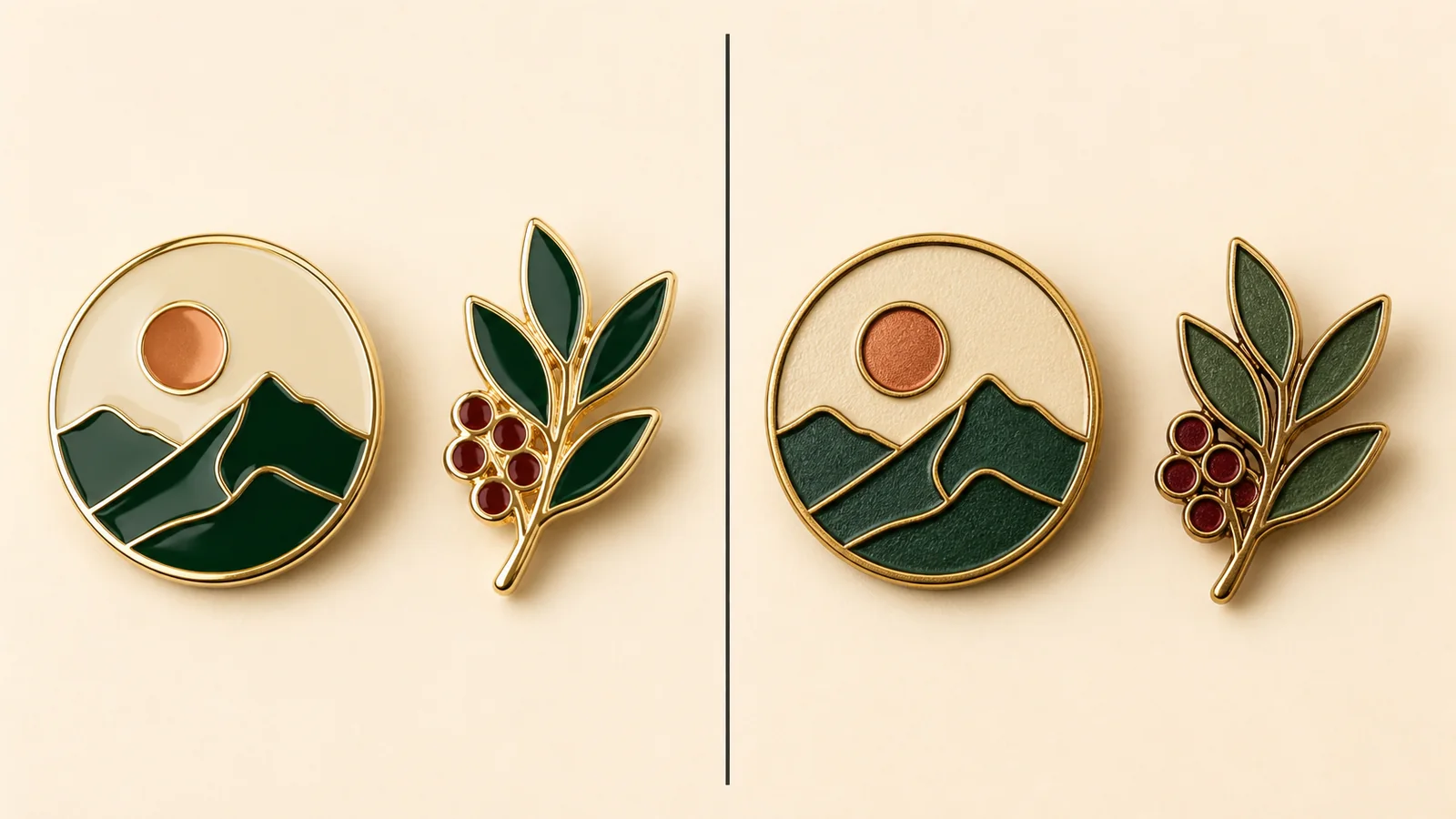
The surface is the most noticeable difference. Soft enamel leaves color below the metal lines, while a hard-enamel-look process creates a smoother polished face. Both can reproduce strong brand artwork when line widths, color separation, plating and size are designed for the selected process.
Which enamel process suits 250–500 logo pins for giveaways?
Soft enamel can provide a tactile, recognizable promotional pin, while a smooth hard-enamel look can support a more polished retail or employee-gift presentation. Compare the same size, colors, backing and packing. For free distribution, also consider how the pin will be attached and whether a backing card adds useful brand context.
Are hard enamel pins always more durable?
A smooth surface can resist some visible recess wear, but overall durability also depends on base metal, plating, edge design, post attachment, clutch and actual use. Ask the supplier to explain the complete construction rather than judging durability from the enamel label alone.
The main difference between hard and soft enamel pins is the surface. Soft enamel has recessed color below raised metal lines, while hard enamel is filled and polished smooth. Soft enamel is usually more textured and budget-friendly; hard enamel is usually smoother and more premium-looking.
What is the surface difference?
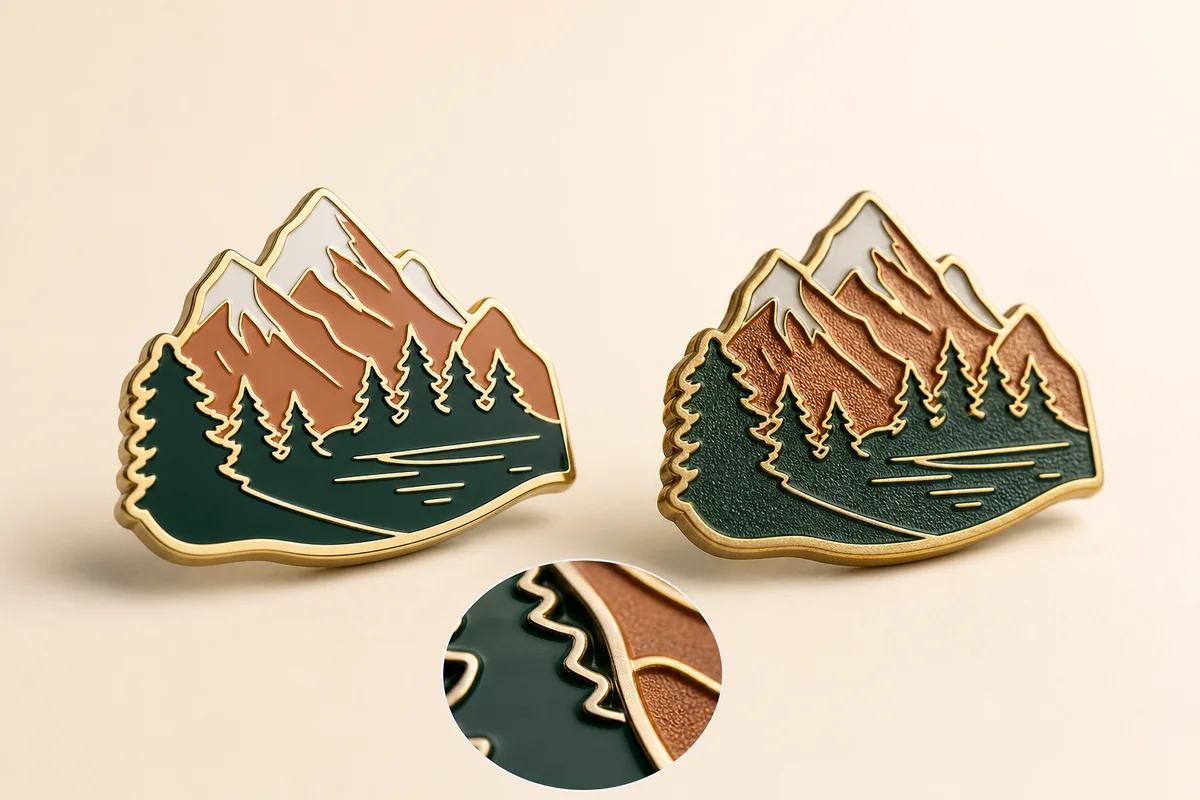
Soft enamel color sits below raised metal lines. When light moves across the pin, the metal catches highlights and the recessed color remains visible. The surface can be felt with a fingertip, which makes soft enamel appealing for bold graphics and buyers who value texture.
Hard enamel color is filled and polished until the face is smooth and level with the metal lines. The result feels more like a jewelry surface. That smoothness can make a simple logo or controlled color palette appear especially clean, but it is not a universal quality ranking.
How does appearance change?
Soft enamel often has stronger apparent contrast between metal and color because the raised lines cast tiny shadows. Antique and dark platings can emphasize that effect. Hard enamel reflects as a flatter plane and can feel refined in polished gold, silver or black nickel.
Artwork matters more than labels. A detailed animal with expressive outlines may benefit from soft enamel texture. A minimal corporate symbol may benefit from a smooth hard enamel face. Review examples that use a similar line density and size, not only unrelated showcase pieces.
What about durability and everyday wear?
Both finishes can be suitable for ordinary lapel pin use when produced and handled correctly. Hard enamel’s polished surface is often chosen for frequent wear, while soft enamel is sometimes combined with a clear epoxy coating when extra surface coverage is desired.
Attachment, storage and packaging also matter. A pin that rubs against another metal item in an unprotected bag can mark regardless of enamel type. Ask how the finished pins will be individually packed and how retail stock should be stored.
How do detail and color affect the choice?
Enamel colors usually need metal boundaries, so very thin lines, tight corners and tiny isolated areas can be difficult. The supplier should flag areas that need widening or merging. Hard enamel polishing may also influence how delicate metal lines are handled.
Use a purposeful palette. More colors can increase production handling without improving the design. Record color references in the artwork proof and remember that a luminous screen cannot perfectly predict opaque enamel on reflective metal.
Which finish is more affordable?
Soft enamel is often the more economical direction for the same size and specification because hard enamel requires additional filling and polishing work. However, quantity, size, plating, mold, color count, posts, packaging and freight can outweigh the finish difference.
Ask for comparable quotations: keep design, dimensions, plating, clutch and packaging consistent, then change only the enamel process. This reveals the real tradeoff instead of comparing two products with different specifications.
Which finish suits a 100–500 piece order?
For a 100-piece artist release, soft enamel can deliver expressive texture and keep the initial run focused. For a 250-piece premium member gift, hard enamel may support a smoother presentation. A 500-piece promotional campaign may prioritize budget, clear branding and durable individual packing.
These are examples rather than rules. Start with what the recipient will notice: tactile texture, polished surface, fine color, size or packaging. Spend on the feature that supports that goal.
What should you check in the proof?
Confirm overall dimensions, metal line width, color boundaries, plating, front and back, post location and clutch. Ask whether the proof illustrates raised and recessed areas clearly. If epoxy or printing is included, its coverage and purpose should be identified.
Do not approve only because the colors look attractive on a monitor. Read production notes and request clarification for any area where two colors touch, a line becomes very narrow or a small detail may close during manufacturing.
Buyer comparison and checklist
| Factor | Soft enamel | Hard enamel |
|---|---|---|
| Surface texture | Recessed color areas; tactile metal lines | Smooth, polished and level |
| Appearance | Graphic contrast and visible relief | Clean, jewelry-like face |
| Durability | Suitable for normal use; epoxy may be discussed | Smooth surface often chosen for frequent wear |
| Detail | Strong raised outlines; tiny areas need review | Crisp when artwork is production-ready; tiny lines need review |
| Color | Visible recessed fills | Polished opaque color areas |
| Cost | Often lower for a comparable specification | Often higher due to filling and polishing work |
| Suitable order type | Expressive merchandise, clubs, events | Premium gifts, brand marks, member pins |
| Best use cases | Bold art, textured character, budget-aware tests | Smooth logos, formal presentation, polished collections |
Frequently asked questions
Is hard enamel always better than soft enamel?
No. Hard enamel and soft enamel create different surfaces and cost structures. The better choice depends on artwork, use, appearance and budget.
Which finish shows more texture?
Soft enamel has recessed color areas below the metal lines, so the surface texture is more noticeable.
Which finish looks smoother?
Hard enamel is filled and polished to a level surface, producing a smooth face.
Can very small details be made in either finish?
Small lines and gaps may need adjustment in both processes. The practical limit depends on pin size, metal line width, color boundaries and artwork.
Which finish is better for a 100-piece order?
Either can be used. Compare the same size, plating, color count, attachment and packaging so the finish is the main variable.
Does epoxy make soft enamel the same as hard enamel?
No. Epoxy can add a clear protective dome, while hard enamel is filled and polished as part of a different surface process.
Can a design use printed detail with enamel?
Printed details may be possible where suitable. Confirm how they are protected and how they interact with the enamel and metal surface.
Products for this type of order
Custom enamel pins and corporate event pins.
More helpful guidance
Learn how to order 100 custom enamel pins and how to evaluate custom pin costs.
Recommended options: Custom soft enamel pins, Custom hard enamel pins.
Factory quotation · MOQ from 100 pieces
Request a Specification-Based Enamel Pin Process Quote
Send one written specification covering quantity, artwork, size, finish, ribbon or attachment, packing, destination and required in-hand date. We will review feasibility before quoting.